Why Hotel Assumptions Cost First-Time Guests Money
Walking into your first hotel stay without knowing the rules is a bit like agreeing to a contract you haven't read. Hotels operate on policies that are clearly documented — but rarely explained at booking. The result is a string of surprised guests discovering unexpected charges, inflexible cancellations, and services that don't work the way they imagined.
The myths below aren't obscure edge cases. They're the assumptions that come up again and again among first-time travelers. Getting them straight before you arrive puts you in control of your stay — and your budget. If you've encountered similar surprises when booking flights, our piece on flight booking myths that cost first-time travelers money covers that territory too.
Myth
The minibar in my room is a complimentary perk — the hotel wants me to enjoy it.
Fact
Minibar items are priced individually, often at a significant markup, and are billed directly to your room account.
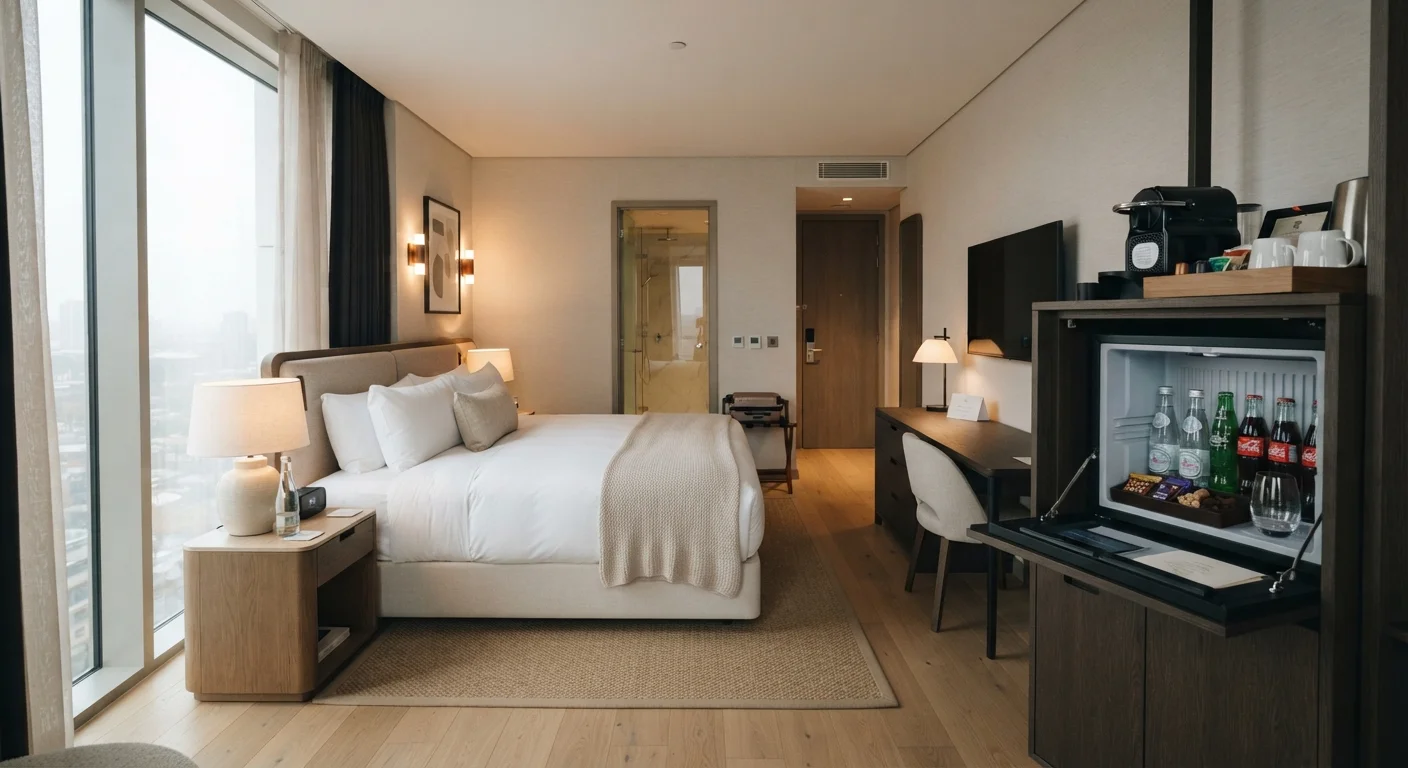
The minibar is one of the most common sources of surprise charges for first-time hotel guests. Items are typically priced two to four times higher than retail, and many modern minibars use weight sensors that log a charge the moment an item is lifted — even if you put it back. Always check the itemized price list inside the minibar door or ask the front desk before consuming anything.
Myth
I can always change or cancel my booking — hotels are flexible about that sort of thing.
Fact
Cancellation policies vary widely, and non-refundable rates carry penalties that hotels are not obligated to waive.
Rate types matter enormously. A flexible or "pay at hotel" rate typically allows cancellation up to 24–48 hours before arrival. A non-refundable or "advance purchase" rate, which is usually priced lower, means you forfeit payment if plans change. Before booking, scroll past the price to read the cancellation terms in full. If flexibility is a priority, the lower price of a non-refundable rate may not be worth the risk.
[important_callout]Myth
If I arrive early, the hotel will let me check in — the room is probably already clean.
Fact
Early check-in is never guaranteed and depends entirely on room availability at the time of your arrival.
Standard check-in windows typically open between 2 p.m. and 4 p.m. Hotels need time to clean and inspect rooms after previous guests depart, and a fully booked property rarely has rooms ready ahead of schedule. You can request early check-in when you make your reservation, but the hotel is not obligated to honor it. Most properties will store your luggage so you can explore while you wait.
Myth
Housekeeping will clean my room every single day — that's part of what I'm paying for.
Fact
Daily housekeeping is no longer universal; many hotels now offer it every few days or only on request.
Housekeeping practices have shifted considerably across the industry, with many properties moving to opt-in models or reduced-frequency service. When you check in, ask the front desk how housekeeping is scheduled at that specific property. If you need fresh towels or additional toiletries between cleans, most hotels will provide them on request at no extra charge.
Myth
A five-star hotel is the same quality everywhere in the world — the rating is a reliable benchmark.
Fact
Hotel star ratings are not governed by a single global standard; they vary by country, region, and the rating body involved.
In the United States, star ratings are assigned by different organizations — including hotel chains themselves, travel platforms, and independent rating bodies — using different criteria. A four-star property in one country may have significantly different facilities and service levels than a four-star property in another. Reading recent guest reviews alongside official ratings gives a more accurate picture of what to expect.
Myth
The hotel rate I see covers everything — there won't be any extra fees at checkout.
Fact
Many hotels charge mandatory resort fees, destination fees, or parking fees that are not included in the advertised nightly rate.
These additional charges — sometimes called resort fees, amenity fees, or destination fees — can add $20 to $50 or more per night to your total bill, regardless of whether you use the amenities they supposedly cover. Always check the full rate breakdown before confirming a booking, and ask the property directly if any mandatory fees apply. This is especially common at resort-style hotels and urban properties in major cities.
[warning_callout]How to Protect Yourself Before and During Your Stay
A few simple habits eliminate most of the friction first-time hotel guests run into.
~$3B
Annual U.S. resort fee revenue (estimated)
Industry analysts have estimated that U.S. hotels collectively collect billions in mandatory resort and destination fees annually, separate from room rates.
24–48 hrs
Typical flexible cancellation window
Most flexible hotel rates require cancellation at least 24 to 48 hours before arrival to avoid a penalty charge equal to one night's stay.
- Read the full rate details before booking. Scroll past the nightly price to find cancellation terms and any listed fees. If the booking page mentions a resort fee, that amount will be added at checkout.
- Call or email ahead for special requests. Early check-in, specific room types, and accessibility needs are best communicated before arrival — not at the front desk when rooms are already assigned.
- Review your folio before checkout. Ask for an itemized bill the night before you leave. Disputing a charge at the desk is far easier than doing so after you've returned home.
- Know your cancellation deadline. Set a calendar reminder when you book. If your plans are uncertain, a flexible rate's higher price often saves money compared to forfeiting a non-refundable booking.
Hotel stays share some of the same planning logic as other travel decisions. For a broader look at assumptions that trip up beginners, see our articles on travel money myths and what first-time travelers get wrong about hostels. Being informed before you arrive is the single most reliable way to make any lodging experience go smoothly.