
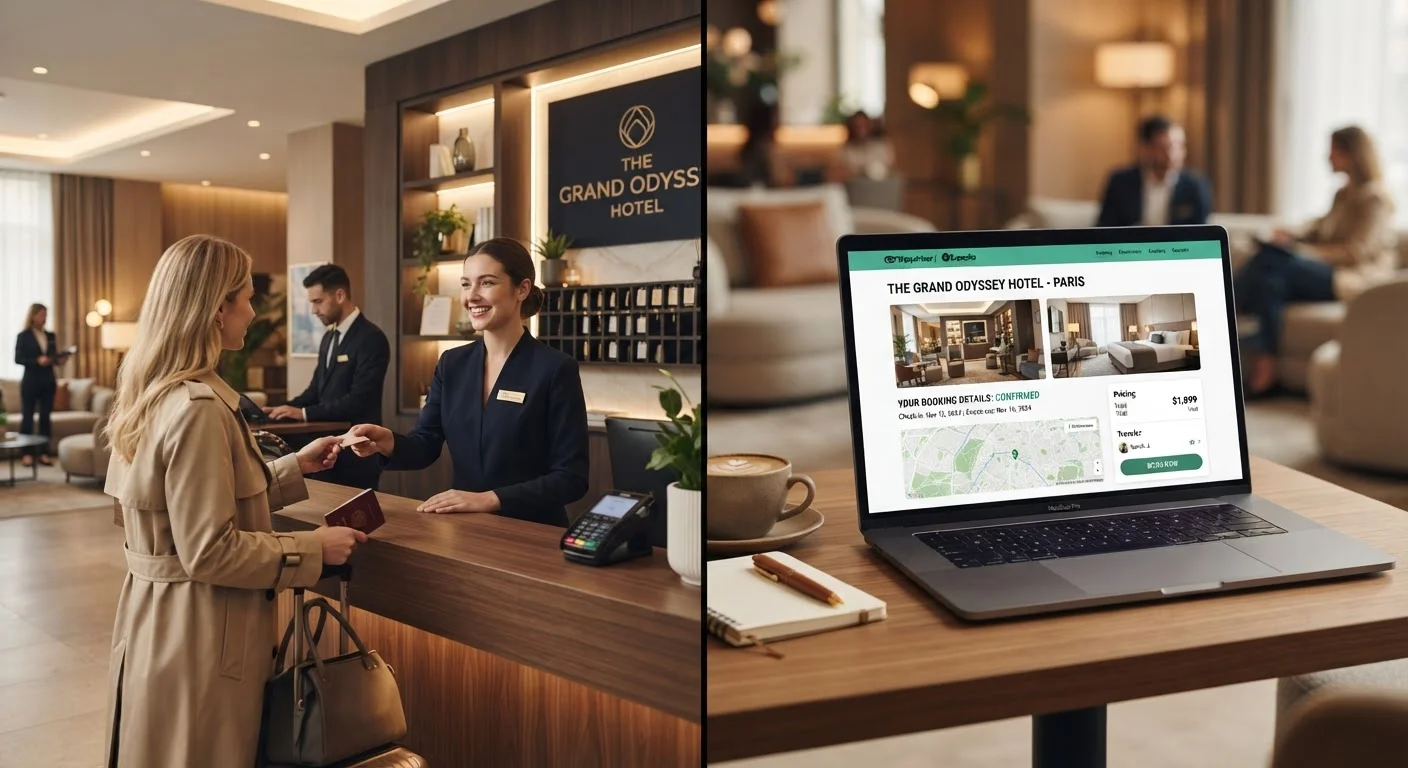
Same Room, Different Relationship
When you search for a hotel room, the same property often appears on the hotel's own website and on online travel agencies (OTAs) — platforms that aggregate listings from many hotels in one place. The room number, the bed size, the view: all identical. What changes is the relationship governing your stay.
When you book direct, your reservation contract is entirely with the hotel. When you book through an OTA, that platform becomes the intermediary — it holds your payment, issues your confirmation, and is technically your first point of contact for most changes. The hotel sees you as the OTA's customer, not its own, which matters more than most first-time travelers expect.
For a fuller grounding in how these channels compare at the decision stage, see our primer on booking channels. This article focuses specifically on what happens after you click confirm.
How Perks and Priority Are Distributed
Hotels have strong financial incentives to prefer direct bookings. OTAs typically charge hotels a commission on each reservation — an industry norm that has led many hotel brands to create "direct booking benefits" designed to shift consumer behavior.
These benefits vary by property, but commonly include:
- Loyalty points: Most hotel loyalty programs only credit points when you book directly with the brand. Booking through an OTA can disqualify you from earning points on that stay, depending on the program's rules.
- Room upgrade eligibility: Hotels often prioritize upgrade requests for direct bookers, particularly loyalty members, over guests who arrived through a third-party channel.
- Complimentary amenities: Some properties offer direct bookers small perks such as Wi-Fi inclusion, late checkout requests, or food and beverage credits that aren't available through OTA rates.
None of this is guaranteed — policies differ by brand and individual property. Always check the specific hotel's direct booking page for its stated benefits before assuming.
| Criterion | Booking Direct | Third-Party Sites (OTAs) |
|---|---|---|
| Who holds your reservation | The hotel itself | The OTA platform |
| Loyalty points eligibility | Typically yes | Often excluded |
| Room upgrade priority | Generally higher | Generally lower |
| Modification ease | Direct with hotel | Via OTA, then hotel |
| Property comparison | One hotel at a time | Many hotels at once |
| Problem resolution at check-in | Resolved at front desk | May require OTA contact |
| Possible bundled deals | Rarely available | Sometimes available |
Cancellations, Changes, and Who Actually Helps You
This is where the booking channel choice has the most practical impact for first-time travelers. If your plans change or something goes wrong at check-in, the resolution process is fundamentally different.
With a direct booking, the hotel's front desk can often adjust your reservation on the spot — modifying dates, correcting a room type, or processing a refund according to their own policy. There's one party to speak to, and that party has full access to your reservation.
With an OTA booking, the hotel may tell you that any change must go through the platform that holds your reservation. The OTA's customer service team then contacts the hotel on your behalf. This triangle can slow things down, especially during busy periods or when time-sensitive issues arise at check-in.
For a closer look at how rate type affects your options before anything goes wrong, understanding refundable vs. non-refundable rates is worth reviewing alongside this topic.
What "Best Rate Guarantee" Actually Means
Many hotel brands advertise a best rate guarantee, promising to match or beat any lower rate found elsewhere. In practice, claiming these guarantees usually requires submitting a formal request and meeting specific eligibility conditions. The process isn't always instant, and not all rate types qualify. If you spot a price discrepancy, contact the hotel directly to ask whether the guarantee applies before assuming it will be honored automatically.
Booking myths also play a role here — many travelers assume all platforms show identical terms for the same rate. They often don't. The booking myths article covers this in detail.
When Third-Party Sites Genuinely Help
OTAs serve a legitimate research function, particularly for travelers who haven't yet decided where to stay. Being able to filter dozens of properties by neighborhood, price range, amenity set, and review score on a single screen is genuinely useful — something the hotel's own website can't replicate.
Some travelers also find that OTA platforms surface rates or availability windows that the hotel's direct site doesn't display as prominently. Prices for the same room aren't always identical across channels, though the difference is rarely dramatic and runs in either direction. The Smart Booking hub explores how and when these gaps appear.
A reasonable approach many experienced travelers use: research and compare on OTAs, then complete the booking directly with the hotel once you've made your decision. This preserves the research advantage while avoiding the intermediary complications.
This article provides general educational information about hotel booking channels. Policies on loyalty points, perks, and cancellation terms vary by property and are subject to change. Always verify the specific terms with the hotel or platform before confirming your reservation.