
Why Hotel Location Deserves More Than a Quick Map Check
Most first-time travelers glance at a map, confirm the hotel is somewhat near their main attraction, and call it done. That quick check misses a lot. A hotel can look central on a map yet sit in a noisy construction zone, require three transit transfers to reach any landmark, or occupy a block that feels unsafe after dark.
Location shapes your budget, your energy levels, and your overall sense of security. Before you commit, it's worth pausing to evaluate several distinct factors — not just distance. If you're still narrowing down where you're going, the destination research checklist is a useful starting point before you focus on neighbourhoods.
Proximity to Your Actual Itinerary
"Central" is relative. A hotel near the historic district may be far from the waterfront, stadium, or conference centre you'll actually spend time at. Before booking, sketch out your three or four most-visited spots and check travel time from the hotel to each one — not just to the city's most famous landmark.
Free mapping tools let you drop pins and measure walking or transit times. If your itinerary is geographically spread out, a hotel near a major transit hub often serves you better than one wedged between two specific attractions.
Map your actual itinerary stops, not just the city's headline attraction.
Transit Access and Walkability
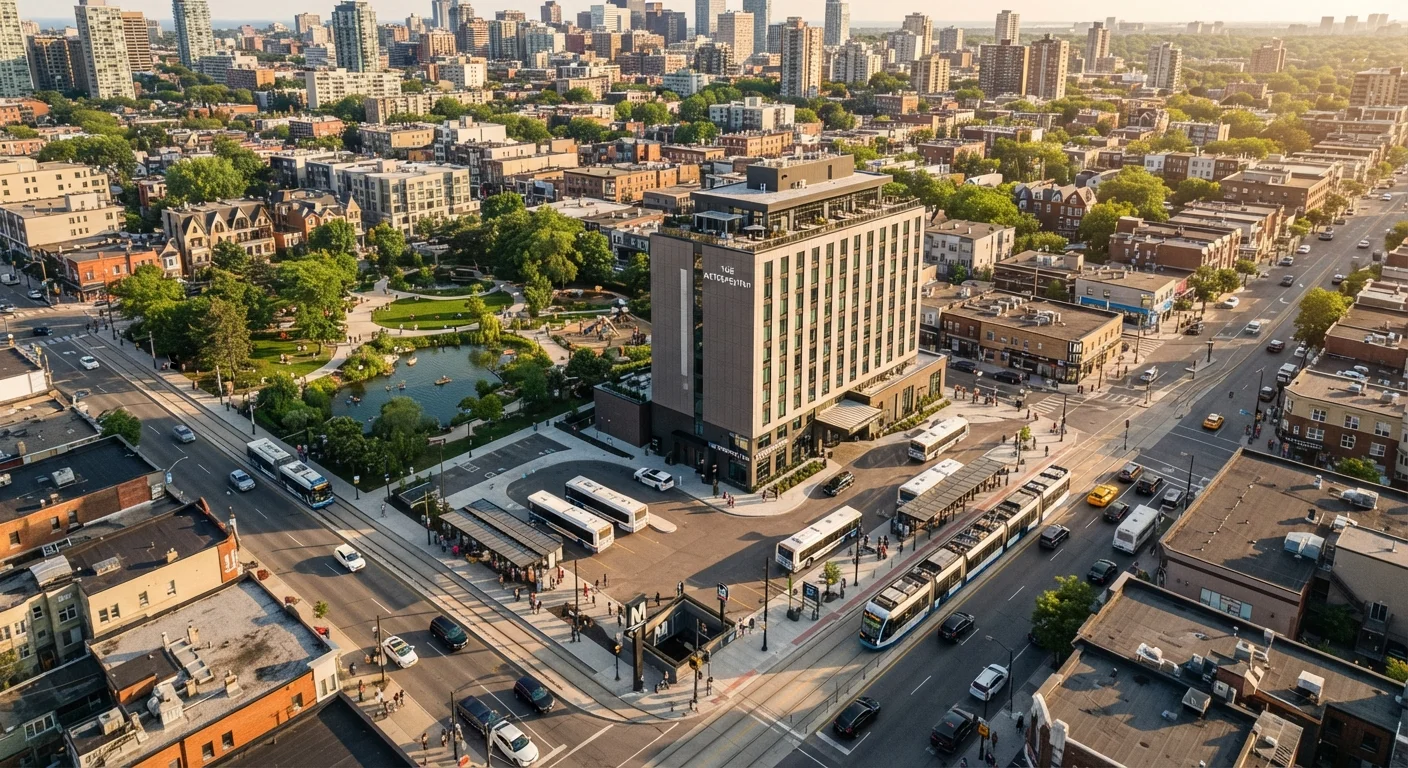
A hotel a short walk from a metro station, bus corridor, or train terminal can save significant time and money compared to one that requires taxis for every outing. Look for the nearest transit stop, check its frequency and hours, and confirm it connects to the places you plan to visit.
Walkability matters too. A neighbourhood with wide sidewalks, street-level shops, and pedestrian crossings makes early mornings and late evenings far more pleasant than an area designed around car travel. Many cities publish walkability data, and street-level photo tools can help you preview the pedestrian experience before you arrive.
A hotel near a transit hub can cost less overall than a cheaper room requiring taxis.
Neighbourhood Safety at Different Times of Day
A block can feel entirely different at noon versus midnight. Research how a neighbourhood is described by travellers who stayed there — look for mentions of comfort levels during evening walks, visibility of lighting, and foot traffic after dark. City tourism boards and travel forums often include candid neighbourhood breakdowns.
Keep in mind that "safe" is not uniform across a neighbourhood. A hotel on one end of a street may have a very different environment than one two blocks away. Use the street address — not just the district name — when researching. The destination planning guidance includes safety considerations worth reviewing before finalising any booking.
Research the specific block, not just the district name, when assessing safety.
Noise Sources Nearby
Hotel reviews frequently mention noise, but it's worth investigating proactively rather than discovering it at 2 a.m. Common culprits include bars and nightlife venues, early-morning refuse collection, highway on-ramps, flight paths, and construction sites. A hotel near an entertainment district may be thrillingly convenient by day and exhausting by night.
When reviewing a hotel, search specifically for noise-related comments. Also check whether rooms facing the street differ from courtyard-facing rooms — this detail often influences whether a stay is restful or not, and some hotels let you request a quieter room type at booking.
Search reviews specifically for noise mentions before assuming a central hotel means good sleep.
Access to Everyday Amenities
First-time travellers sometimes underestimate how much time they'll spend on basic logistics: finding food in the morning, picking up medication, withdrawing cash, or buying a forgotten item. A neighbourhood with a pharmacy, grocery store, café, or convenience shop within walking distance adds genuine day-to-day convenience.
This factor becomes especially important for longer stays, early-morning departures, or trips with children. If the hotel is in a primarily commercial district that closes on weekends, you may find yourself with limited options at inconvenient times.
Easy access to a pharmacy or grocery store saves real time on longer or family trips.
Airport or Station Transfer Logistics
Your hotel location affects not just daily sightseeing but also how smoothly your trip begins and ends. A hotel that looks perfectly located for attractions can add an hour of travel — and significant cost — to each airport transfer. Calculate the full journey from your arrival point to the hotel, including any luggage you'll be carrying.
For short trips, a hotel closer to your departure terminal may actually save more time and stress than one positioned for maximum sightseeing access. This trade-off is particularly relevant if you have an early departure flight or a tight connection window.
Factor airport transfer time and cost into your location decision, not just sightseeing convenience.
Putting It All Together Before You Book
None of these factors exist in isolation. A hotel that scores well on transit access but poorly on noise levels may still be the right call if you're a heavy sleeper planning early starts. The goal is to weigh the complete picture against your itinerary and travel style.
Try a Simple Location Audit Before Booking
Open a mapping tool and drop a pin on the hotel. Then check travel time to your top three itinerary stops, the nearest transit station, and the nearest grocery store or pharmacy. If any of those distances feel impractical for your trip pace, that's a signal worth heeding before you commit.
Once you've chosen a location, the next decision is choosing the right type of accommodation within it. The lodging-to-trip-style guide walks through how factors like group size, trip purpose, and comfort expectations should shape that choice. For a broader look at accommodation categories, the Lodging Types hub is a helpful reference.